Adam's Apple Demystified: How Thyroid Cartilage Shapes Your Voice
Often recognized externally as the prominent "Adam's Apple," the thyroid cartilage is far more than just a visible bump in the neck. This remarkable anatomical structure plays a pivotal role in some of our most fundamental human abilities: speaking, breathing, and even swallowing. As the largest and most prominent of the cartilages forming the larynx, or voice box, the thyroid cartilage is a guardian, a conductor, and an essential component of the intricate symphony that is human communication and physiological function.
In this comprehensive guide, we'll delve into the fascinating world of the thyroid cartilage, exploring its precise location, intricate anatomy, and the vital roles it performs. Prepare to gain a deeper appreciation for this often-overlooked yet incredibly important part of your anatomy.
What Exactly is the Thyroid Cartilage? Unpacking its Anatomy
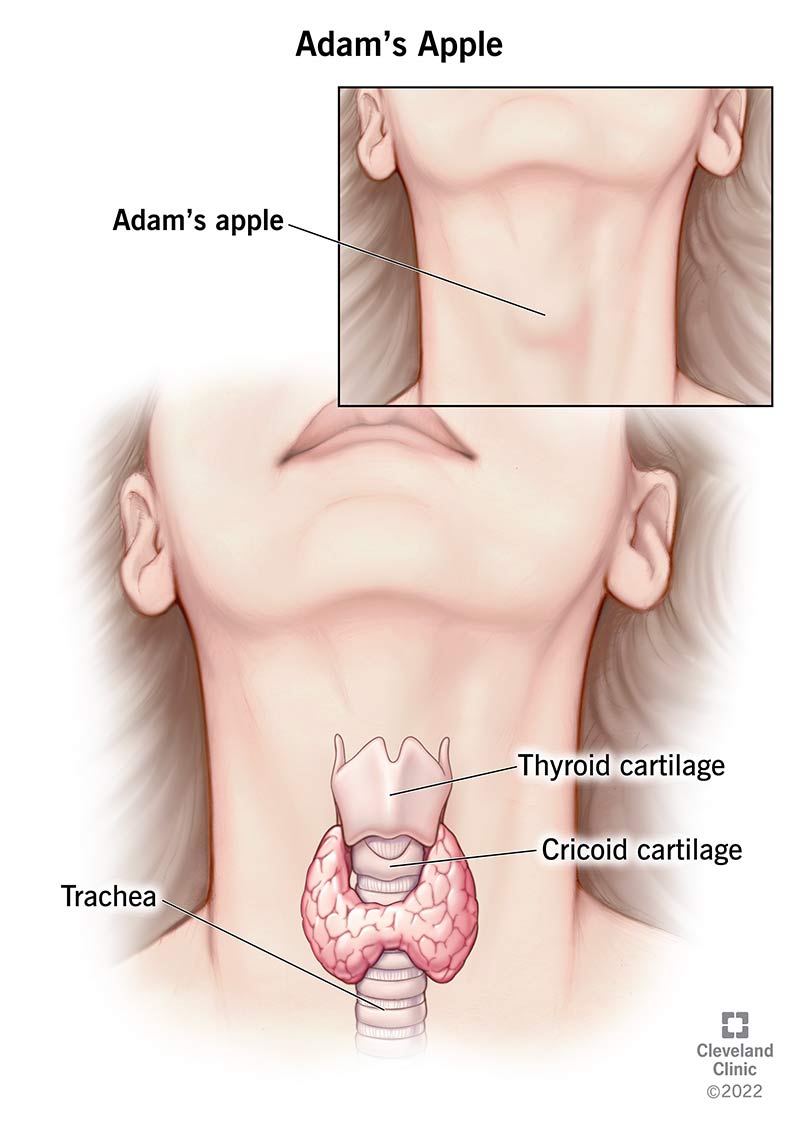
The thyroid cartilage is a robust, shield-like structure situated in the anterior part of your neck. You can typically feel it just above your thyroid gland and directly in front of your windpipe. Anatomically, it's positioned at the level of the C4 to C5 vertebrae, making it a central player in the neck's complex architecture. It stands out as the largest of the nine cartilages that form the laryngeal skeleton, providing foundational support for the delicate structures within this area.
Composed of hyaline cartilage—a tough yet remarkably flexible connective tissue—the thyroid cartilage is built for both resilience and movement. This unique composition allows it to maintain its form while accommodating the dynamic actions of the larynx. Its distinctive shield-like appearance is created by two flat plates, known as laminae, which fuse together at the midline. This fusion point creates the anterior projection that, in some individuals, is visibly prominent and commonly referred to as the "Adam's Apple." The angle at which these laminae meet varies significantly from person to person, directly influencing its external appearance. Adding to its intricate design, the superior border of the thyroid cartilage features a distinctive V-shaped indentation, aptly named the superior thyroid notch.
Beyond its internal structure, the thyroid cartilage is intricately connected to other vital neck components. Its superior edge attaches to the U-shaped hyoid bone, located higher in the neck, via a broad ligament called the thyrohyoid membrane. Inferiorly, it forms a crucial articulation with the cricoid cartilage, creating the cricothyroid joint. These strategic connections are not merely structural; they are fundamental in stabilizing the larynx, allowing it to move fluidly and perform its diverse functions.
The Adam's Apple Phenomenon: Why It's More Prominent in Some
The term "Adam's Apple" is a colloquial and culturally rich name for the anterior projection of the thyroid cartilage. Its common association with men stems from the observable fact that it tends to be more prominent in males, particularly after puberty. This difference is primarily due to hormonal influences. During puberty, increased levels of testosterone in males stimulate the growth of the laryngeal cartilages, including the thyroid cartilage. This growth leads to a larger larynx and a more acute angle of fusion between the thyroid laminae, resulting in a more pronounced external "bump."
While often seen as a secondary sexual characteristic, it's important to understand that the presence and prominence of the Adam's Apple can vary greatly among individuals, regardless of sex. Some women may have a noticeable Adam's Apple, while some men may have a less prominent one. These variations are entirely normal and are influenced by genetics, body type, and the specific angle at which the thyroid laminae fuse. It's a testament to the natural diversity of human anatomy. Understanding this variation can help debunk common misconceptions and foster a more inclusive view of body forms.
Beyond the Bump: Key Roles of Thyroid Cartilage in Voice and Protection
The thyroid cartilage is a truly multifunctional structure, playing critical roles in protecting our delicate vocal apparatus, facilitating the complex process of voice production, maintaining open airways, and even aiding in the crucial act of swallowing.
Guardian of the Voice Box: Protection
One of the primary and most vital functions of the thyroid cartilage is to act as a robust shield, offering critical protection to the delicate structures housed within the larynx. Foremost among these are the vocal cords, which are surprisingly vulnerable to external injury. Its sturdy, shield-like structure serves as a defensive barrier, safeguarding these soft tissues from impacts, pressures, or everyday physical forces. This inherent protection is paramount for maintaining the integrity of the airway and ensuring the uninterrupted function of the vocal cords during daily activities. Imagine the constant strain our neck endures – from turning our heads to potential minor bumps; the thyroid cartilage stands as a first line of defense. For more detailed insights into this protective role, you might find our article Protecting Your Larynx: The Essential Functions of Thyroid Cartilage particularly informative.
The Conductor of Sound: Voice Production (Phonation)
Beyond its protective capacity, the thyroid cartilage is an indispensable component in the intricate process of voice production, also known as phonation. It serves as a crucial attachment point for the vocal cords, which are essentially bands of muscle tissue housed within the larynx. The genius of the laryngeal design lies in the dynamic interplay between the cartilages. Specifically, the articulation between the thyroid cartilage and the cricoid cartilage, forming the cricothyroid joint, is key. This joint allows for subtle yet powerful movements that directly change the tension and length of the vocal cords. When the vocal cords are stretched and tightened, the pitch of your voice rises; when they are relaxed, the pitch lowers. This precise adjustment mechanism enables us to produce the vast range of sounds necessary for speaking, singing, and expressing ourselves, from a deep bass note to a soaring soprano. Without the stable and movable platform provided by the thyroid cartilage, our voices would be monotonous and expressionless.
Maintaining the Airway and Aiding Swallowing
The importance of the thyroid cartilage extends far beyond just voice. It plays a significant role in maintaining the overall patency of the airway – ensuring a continuous, open passage for air to travel to and from the lungs. Its stable position and firm structure prevent the airway from collapsing, which is absolutely essential for continuous respiration. Any compromise to this stability can have serious implications for breathing.
Furthermore, this remarkable cartilage is an active participant in the complex and often underestimated swallowing mechanism. Working in concert with other laryngeal components, it helps to prevent food and liquids from entering the trachea (windpipe) and instead directs them safely into the esophagus. During the act of swallowing, the entire larynx, including the thyroid cartilage, elevates and moves forward. This coordinated movement contributes to the protective closure of the airway, acting as a sophisticated trapdoor that safeguards our respiratory system from ingested material. This dual role in respiration and deglutition highlights the critical, life-sustaining functions of the thyroid cartilage that often go unnoticed in our daily lives.
Living with Your Thyroid Cartilage: Insights & Practical Considerations
Understanding the anatomy and functions of your thyroid cartilage offers more than just academic knowledge; it provides practical insights into maintaining your health and well-being. Recognizing its role in vocal production underscores the importance of vocal hygiene. Hydration, avoiding excessive shouting or straining, and proper breath support are crucial for keeping your vocal cords healthy, and by extension, supporting the optimal function of your thyroid cartilage.
Given its primary role in protecting the delicate larynx, being mindful of neck protection in daily life is also wise. Whether you're involved in contact sports, riding a bicycle, or simply engaging in activities where a neck injury is possible, safeguarding this area is paramount. Any direct trauma to the neck can potentially impact the thyroid cartilage, leading to voice changes, breathing difficulties, or swallowing problems.
Moreover, variations in the prominence of the Adam's Apple are normal and generally not a cause for concern. However, any sudden changes in its size, the appearance of new lumps in the neck area, or persistent voice changes warrant a medical evaluation. While often harmless, such symptoms should always be checked by a healthcare professional to rule out any underlying conditions affecting the thyroid cartilage or surrounding structures.
To deepen your understanding of this vital structure's location and myriad roles, consider exploring our comprehensive article: Thyroid Cartilage: Location, Anatomy, and Vital Roles in Your Neck.
Conclusion
The thyroid cartilage, frequently known as the Adam's Apple, is a cornerstone of our laryngeal anatomy. Far from being a mere aesthetic feature, it is a multitasking marvel, serving as a protective shield for our vulnerable vocal cords, an essential component in shaping the unique pitch and quality of our voices, and a critical structure for maintaining an open airway and facilitating safe swallowing. Its robust yet flexible hyaline composition and intricate connections allow for a harmonious interplay of these vital functions. By demystifying this prominent structure, we gain a greater appreciation for the complexity and ingenuity of the human body, understanding how this single piece of cartilage underpins so much of our daily existence.